April in Upstate South Carolina is beautiful. The dogwoods are blooming along Pelham Road, the temperatures are finally comfortable, and everyone in Greenville and Spartanburg is itching to get outside. But April also brings something less welcome: rain. Lots of it.
If you've ever walked out after a spring storm to find water pooling on your patio, washing soil away from your retaining wall, or sitting stubbornly on your driveway pavers, you already know the frustration. What you might not know is that most of that damage is entirely preventable — and that the decisions made during installation (or the upgrades you make now) can be the difference between a hardscape that lasts 30 years and one that needs costly repairs in five.
At Southern Pavers, we've built hundreds of patios, driveways, pool surrounds, and retaining walls across the Upstate — from Greenville and Simpsonville to Greer and Anderson. And every spring, we get calls from homeowners dealing with drainage problems that could have been avoided. So let's talk about what's really going on under your feet, and what you can do about it.
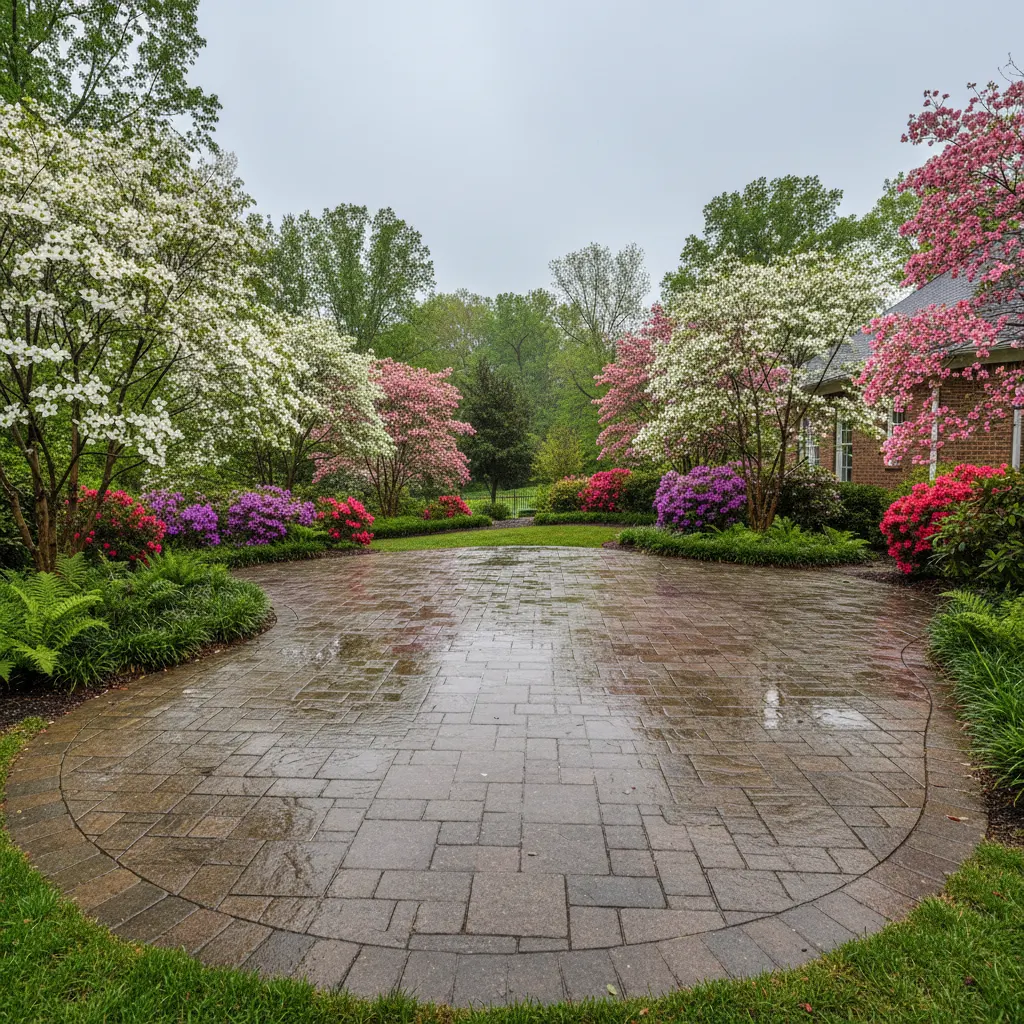
Why Upstate SC's Spring Weather Is Uniquely Hard on Hardscaping
Here's something most homeowners don't realize: the Greenville-Spartanburg area gets an average of 50+ inches of rainfall per year, with April and May consistently among the wettest months. That's more annual rainfall than Miami. Add in our clay-heavy Piedmont soil — which drains slowly and expands when wet — and you have a recipe for real drainage challenges.
Clay soil is the silent villain in most Upstate SC drainage stories. Unlike sandy soils found in the Lowcountry, our Piedmont clay holds water rather than letting it pass through. When that water has nowhere to go, it pools on hard surfaces, seeps under paver bases, causes erosion along retaining walls, and creates hydrostatic pressure that can literally push structures out of place over time.
This is why proper drainage isn't just a nice-to-have in our region — it's the foundation of every long-lasting hardscape project. We build it into every single installation we do, and it's one of the first things we evaluate when a homeowner calls us about an existing problem.
Common signs your hardscaping has a drainage issue:
- Standing water on your patio or driveway that takes hours (or days) to clear after rain
- Soil washing out from under or around your paver edges
- Pavers that are shifting, sinking, or becoming uneven over time
- Efflorescence (white chalky deposits) appearing on your pavers after wet weather
- Retaining wall blocks that are leaning, bulging, or showing cracks
- Muddy runoff flowing toward your home's foundation
Building Drainage Right: What Goes Into a Properly Installed Hardscape
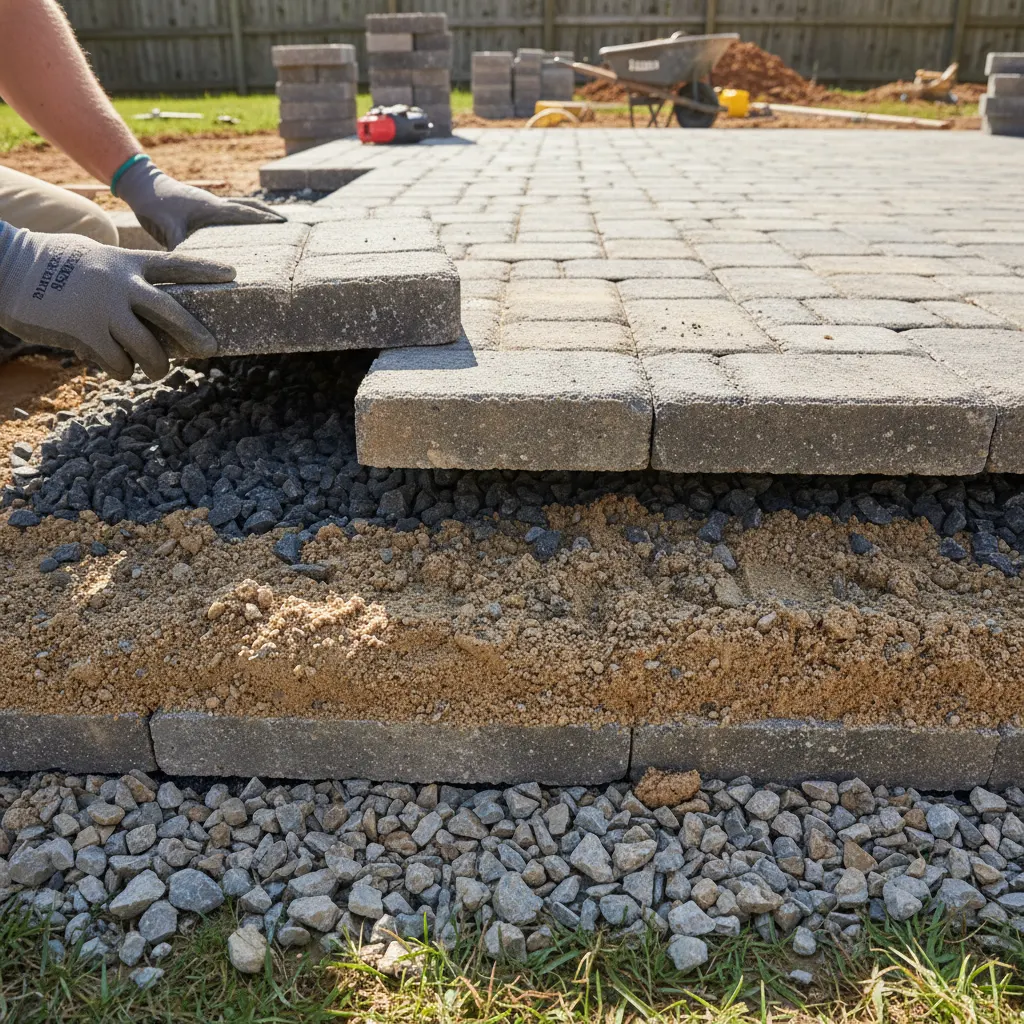
The best drainage solution is one you never have to think about — because it was engineered correctly from day one. When our team installs a paver patio, driveway, or pool surround, drainage planning starts before a single paver is placed.
It begins with the base. Every Southern Pavers installation uses a compacted gravel aggregate base — typically 4 to 6 inches for patios, 8 to 12 inches for driveways — that allows water to percolate down and away from the surface. We grade the sub-base with a deliberate slope (typically 1 to 2 percent away from your home) so that water has a clear path to travel. That might sound like a small detail, but it's the single most important factor in preventing water pooling on patio pavers.
On top of that base, we use a bedding layer of coarse sand or stone dust, depending on the application, which further aids drainage while providing a stable, level surface for your pavers. When we're working with premium materials like Belgard or Tremron pavers, we follow manufacturer specifications precisely — both brands have their own installation standards that, when followed correctly, dramatically extend the life of the installation.
For projects on sloped lots — which is most of Greenville's east side, much of Spartanburg County, and virtually all of the foothills — we often incorporate channel drains or strip drains at low points in the hardscape. These are discreet linear drains that collect surface water and redirect it through underground piping to a safe discharge point away from your home and property line.
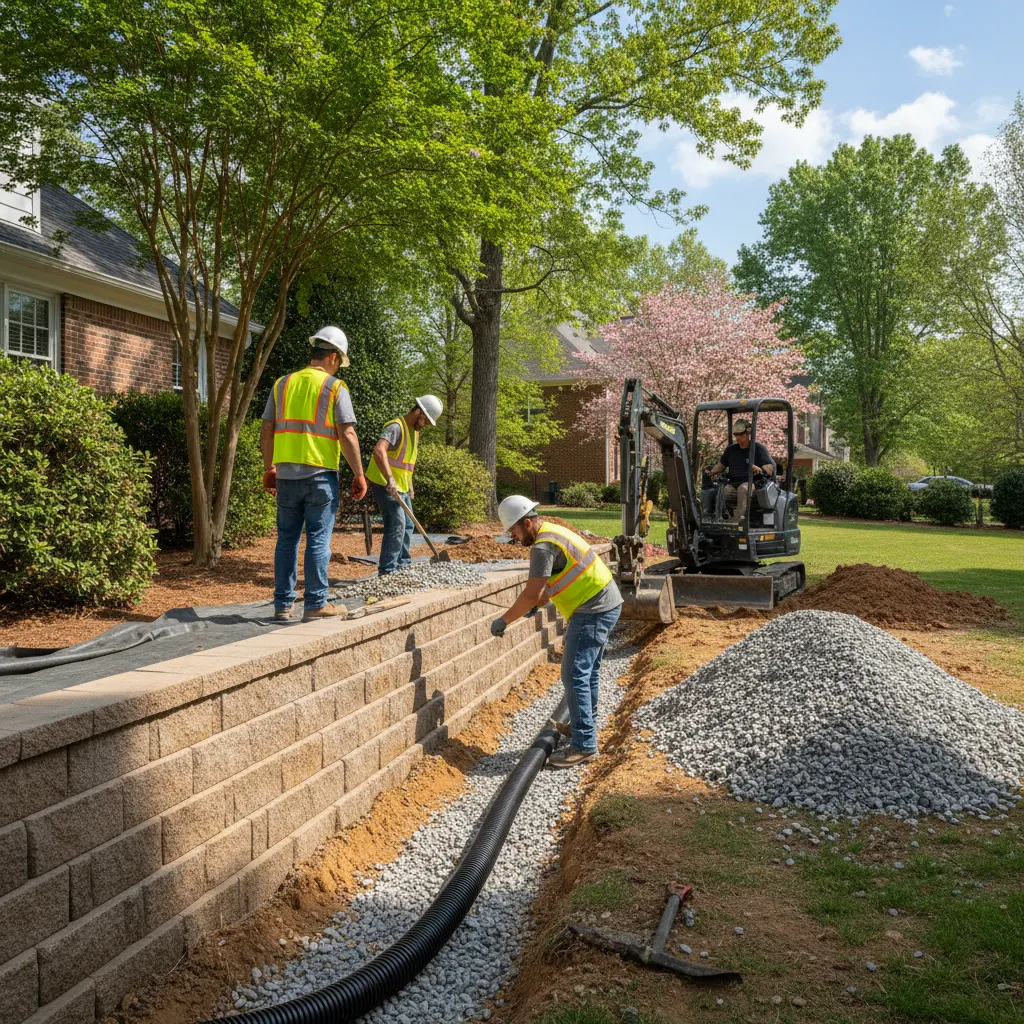
Retaining walls deserve special mention here. A retaining wall that doesn't have proper drainage behind it is a retaining wall that will eventually fail. We install perforated drain pipe (often called a French drain) directly behind every retaining wall we build, surrounded by clean gravel backfill. This relieves the hydrostatic pressure that builds up in wet Upstate SC springs and is the single biggest factor in long-term retaining wall stability. Whether we're building with natural stone, Belgard retaining wall systems, or segmental block, that drainage layer is non-negotiable.
Permeable Pavers: The Drainage Solution Built Into the Surface Itself
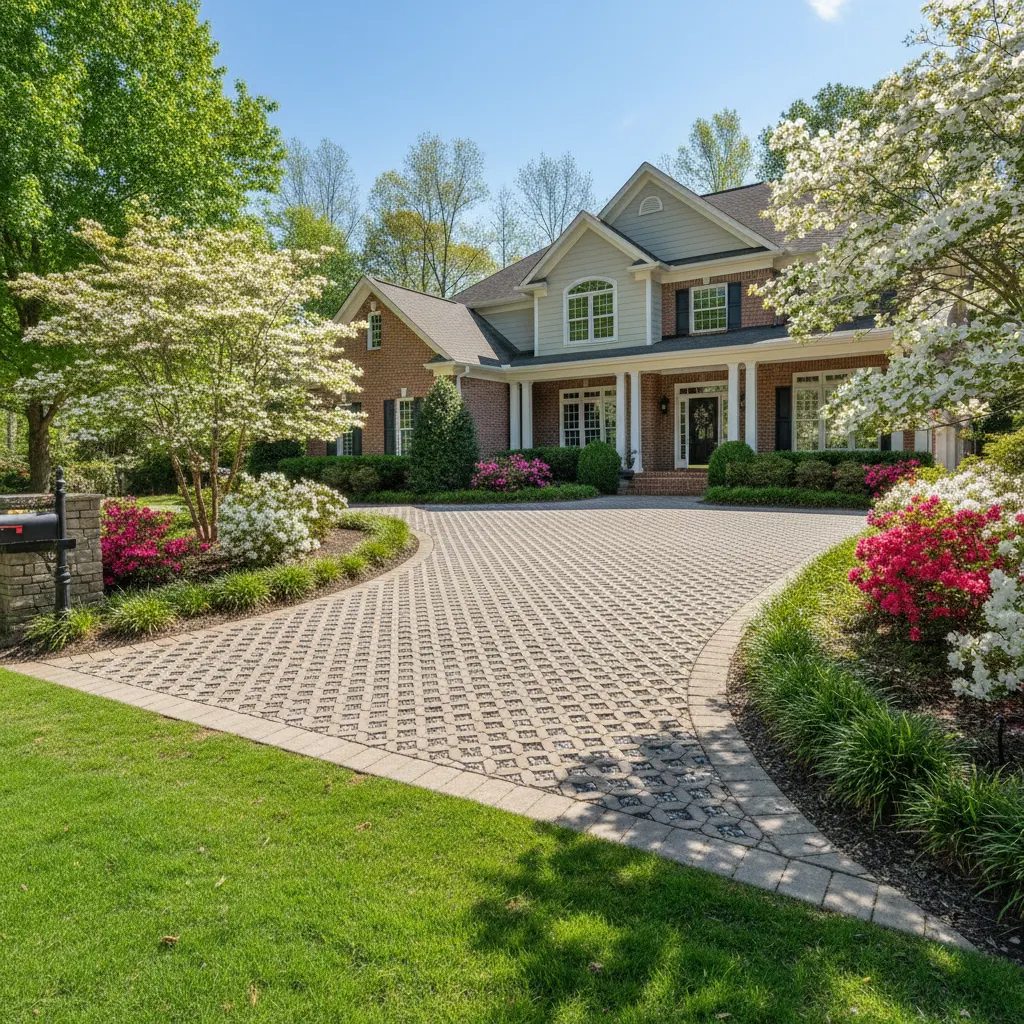
One of the most exciting developments in hardscaping over the past decade — and one we're seeing more and more demand for across Greenville and Spartanburg — is permeable paver systems. These are pavers designed with slightly wider joints filled with crushed stone, or pavers with built-in void spaces, that allow rainwater to pass directly through the surface and into a specially engineered base below.
The concept is elegant: instead of redirecting water away from your hardscape, you let it drain straight down through it. The engineered stone base holds the water temporarily, like a reservoir, and releases it slowly into the soil below — or into an underground collection system. The result is a surface that stays virtually dry even during heavy spring rains, with zero pooling and dramatically reduced runoff.
Permeable systems work beautifully for driveways, walkways, and patios in Upstate SC. They're particularly popular with homeowners in Simpsonville and Greer who have larger lots and want to manage stormwater naturally, and with homeowners in tighter Greenville neighborhoods where runoff onto neighboring properties or into storm drains is a concern. Some municipalities are even beginning to offer incentives for permeable hardscaping because of its stormwater management benefits — something worth asking your local planning office about.
Belgard's Aqua-Roc and several of Tremron's permeable series are products we work with regularly. They're engineered for exactly the kind of rainfall intensity we see here in the Upstate, and they're available in styles and colors that look just as sharp as traditional pavers.
Fixing Existing Drainage Problems: What Your Options Are This Spring
If you're reading this because you already have a drainage problem — water pooling after every rain, pavers shifting, a retaining wall that's starting to lean — the good news is that most issues are fixable without tearing everything out and starting over.
The first step is an honest assessment of what's causing the problem. Sometimes it's as simple as re-grading the surface or adding a channel drain at a low point. Sometimes joint sand has washed out and needs to be replenished with polymeric sand (a jointing sand that hardens slightly and resists erosion — a big upgrade over standard sand). Sometimes the base was undersized or improperly compacted and needs to be addressed more comprehensively.
For retaining walls showing signs of movement or bulging, we always recommend getting eyes on it sooner rather than later. A wall that's starting to move has water pressure behind it that isn't being relieved. Adding a French drain behind an existing wall — which we can often do with targeted excavation rather than a full rebuild — can stop the problem from progressing significantly.
Here are the most common drainage repairs we perform this time of year:
- Channel drain installation: Adding linear drains at patio edges or driveway low points to intercept surface water before it pools
- French drain installation: Underground perforated pipe systems that collect and redirect subsurface water away from hardscaping and foundations
- Re-grading and releveling: Lifting and resetting sections of pavers to restore proper slope and eliminate low spots
- Polymeric sand refresh: Replacing eroded joint sand with polymeric sand to stabilize pavers and reduce future erosion
- Retaining wall drainage retrofit: Adding gravel backfill and perforated pipe behind existing walls to relieve hydrostatic pressure
- Edge restraint repair: Resecuring or replacing failed edge restraints that allow pavers to spread and create drainage gaps
The best time to address any of these issues is right now — before the peak of summer entertaining season, before the heat and humidity of July make outdoor work miserable, and before another season of heavy rain does more cumulative damage to your investment.
We also want to mention one thing that often gets overlooked: sealing. A quality paver sealer doesn't just protect your pavers' color and finish — it also reduces water absorption into the paver itself, which minimizes freeze-thaw damage (yes, we do get freezes in the Upstate) and helps prevent the efflorescence that appears when mineral deposits migrate to the surface with moisture. We use breathable, penetrating sealers that allow moisture vapor to escape while blocking liquid water intrusion. It's a maintenance step that pays dividends every spring.
Whether you're planning a brand-new patio or driveway this spring, troubleshooting an existing drainage issue, or simply want a professional set of eyes on your hardscape before summer arrives, we'd love to help. Joe and the Southern Pavers team serve homeowners across Greenville, Spartanburg, Anderson, Greer, Simpsonville, and the surrounding Upstate SC communities — and we bring the same attention to drainage detail on every project, large or small.
Give Joe a call at (864) 501-6994 or visit southernpaversscpro.com to request your free estimate. Spring is the perfect time to get ahead of drainage problems — and we're ready to help you build something that handles whatever the Upstate sky throws at it.
Ready to Get Started?
Free estimates, no pressure. Tell us what you are thinking and we will show you what is possible.