Why Upstate SC Homeowners Are Rethinking Their Patio Surface in 2026
If you've spent a South Carolina July watching water pool across your backyard after a thunderstorm—or felt the heat radiating off a dark concrete slab well into the evening—you already know the problem. Upstate SC summers are no joke. We get the heat, we get the humidity, and we get those sudden afternoon downpours that dump an inch of rain in forty minutes and leave your yard looking like a swamp.
That's exactly why permeable paver patios have become one of the most requested hardscape upgrades we're building across Greenville, Simpsonville, Greer, and Spartanburg this summer. According to the 2026 Houzz Emerging Summer Trends Report, searches for permeable patio options are climbing fast—and for good reason. Homeowners want outdoor spaces that are beautiful and smart, surfaces that handle real weather instead of fighting it.
At Southern Pavers, we've been solving drainage headaches and heat problems for Upstate SC families for years. And right now, in the middle of peak summer, we're seeing more interest in permeable patio installation in South Carolina than ever before. Let's walk you through exactly what these systems are, why they work so well here, and what to expect when you're ready to build one.
What Makes a Paver Patio "Permeable" — and Why It Matters in South Carolina
Here's the simple version: a traditional poured concrete patio is essentially a sealed surface. When rain hits it, the water has nowhere to go except off the edges—toward your foundation, into your lawn, or straight into the street. In a climate like ours, where Clemson Extension's own research emphasizes grading surfaces away from the home and reducing stormwater runoff, that's a real problem. Clemson Extension HGIC specifically recommends permeable surfaces for patios, walkways, and driveways as one of the most effective ways to manage runoff right at the source.
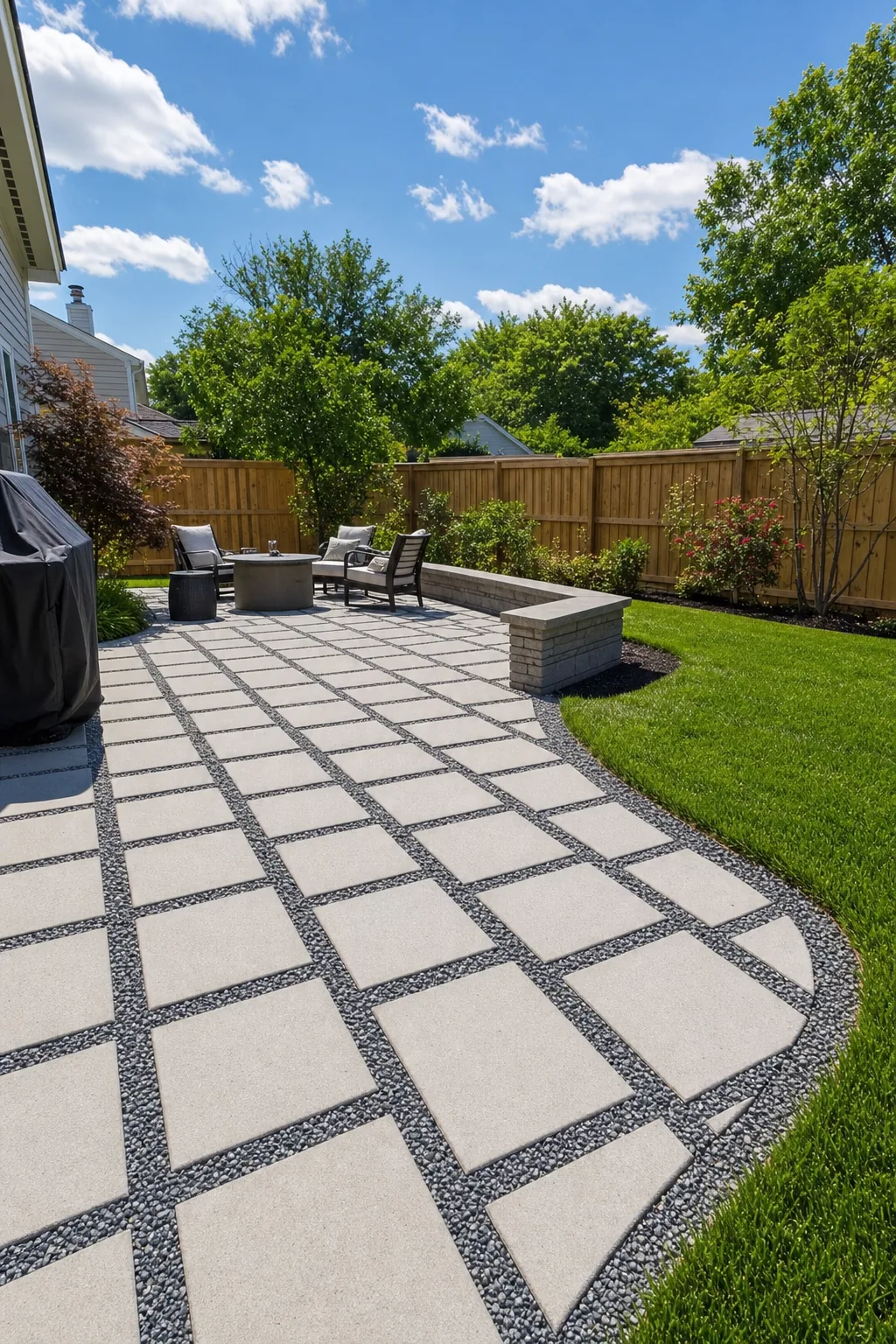
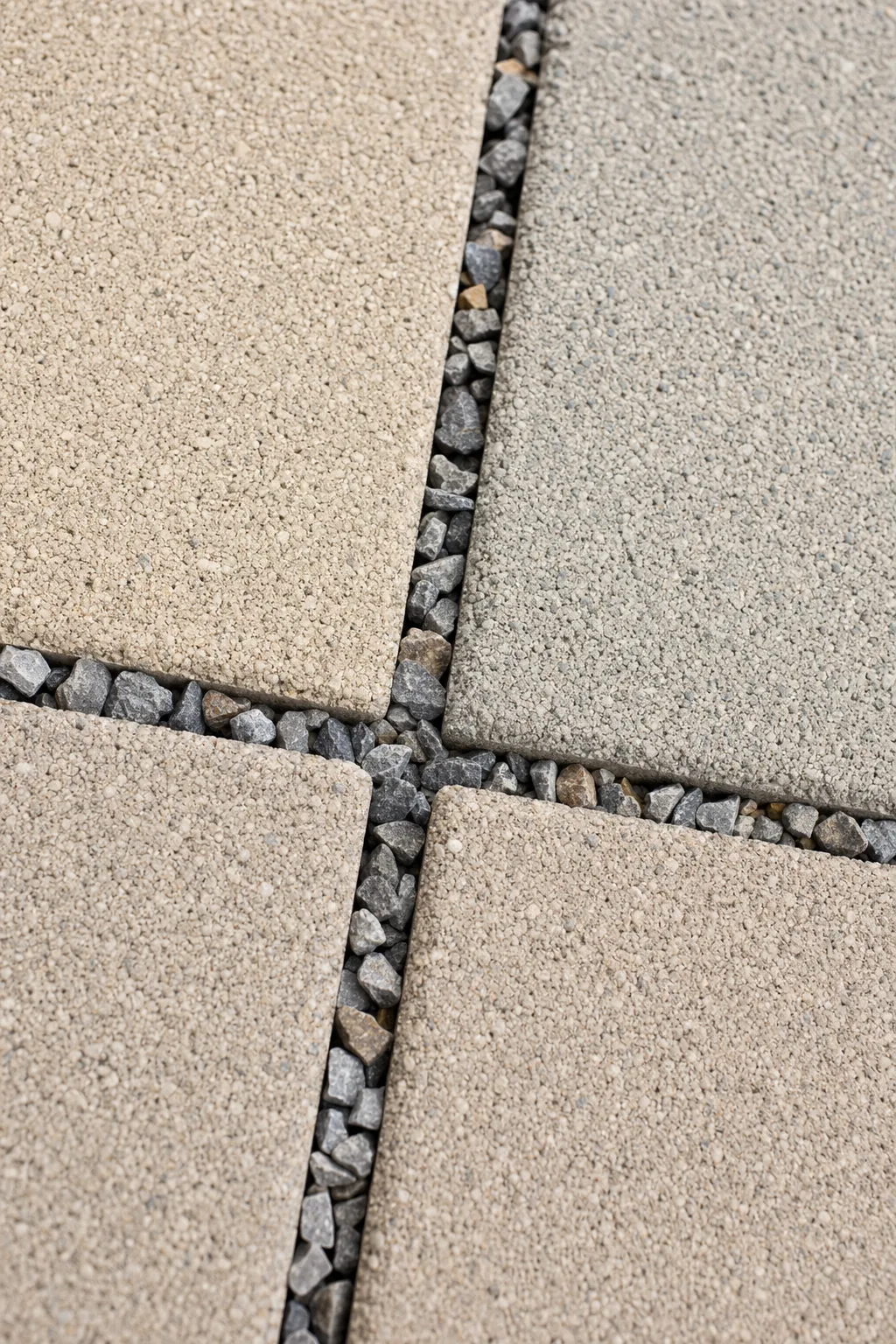
A permeable paver system works differently. Instead of sealing the surface, the pavers are set with open joints filled with angular gravel or specially sized aggregate. Water filters down through those joints, into a compacted gravel base layer, and slowly infiltrates the soil below—the way nature intended. The result is a patio that handles heavy rain without sending a river across your yard, without pooling, and without adding to the stormwater burden on your neighborhood.
For Upstate SC homeowners specifically, here's what that means in practice:
- Sloped lots in Greenville and Anderson stop shedding water toward the house or neighbor's property
- Patios built near pool surrounds or outdoor kitchens drain naturally instead of creating slick, standing-water hazards
- Yards with clay-heavy soil—extremely common across Upstate SC—get meaningful relief from surface saturation
- Foundations stay drier because water is absorbed closer to where it falls, not channeled along the house perimeter
And then there's the heat angle. Light-colored permeable pavers—think Belgard's Urbana or Tremron's Cambridge series in lighter tones—absorb significantly less heat than dark concrete. On a 95-degree Greenville afternoon, that difference is something you feel with your bare feet. The open-joint system also allows some airflow at the surface level, which helps keep the patio more comfortable during those long summer evenings.
The Best Materials for Permeable Patio Installation in South Carolina
Not every paver is designed for a permeable system, so material selection really does matter. When we're designing a patio drainage solution for Greenville SC homeowners, we typically look at a handful of proven options depending on the budget, the style of the home, and the specific drainage challenge we're solving.
Belgard permeable concrete pavers are one of our go-to recommendations. Belgard manufactures pavers specifically engineered for open-joint installation, with precise sizing that maintains consistent joint width across the entire surface. Their Aqua-Loc and similar permeable lines hold up beautifully in humid climates and come in enough color and texture options to complement everything from a modern Simpsonville new-build to a traditional craftsman home in the Five Forks area.
Tremron's permeable paver systems are another excellent choice, particularly for larger patio footprints. Tremron products are manufactured to tight tolerances, which matters a lot in permeable applications—inconsistent pavers mean inconsistent joints, and inconsistent joints compromise drainage performance over time.
For homeowners who want something a little more elevated in look and feel, porcelain pavers with open-joint installation are having a real moment in 2026. Porcelain is naturally non-porous on its surface, but when installed with open aggregate joints over a permeable base, the system still manages drainage effectively while giving you that clean, high-end aesthetic. We've been installing porcelain permeable patios in some of the newer neighborhoods around Greer and Boiling Springs, and the results are stunning.
A few design details that make permeable patios work even better in our climate:
- Gravel border accents along the patio perimeter give water an additional exit path and add a natural, finished look
- Native plantings around the patio edges—something Clemson Extension's Carolina Yards program actively promotes—help absorb runoff and tie the hardscape into the landscape beautifully
- Light to medium paver tones reduce heat absorption significantly compared to charcoal or dark gray options
- Proper sub-base depth is non-negotiable—our installations use a compacted aggregate base sized to handle Upstate SC's rainfall intensity, not a one-size-fits-all spec
We should also mention: if you have a significant slope in your backyard—common in neighborhoods throughout Greenville, Anderson, and Spartanburg counties—a permeable patio alone may not be the complete solution. In those cases, we often pair the permeable patio system with a retaining wall to manage grade changes, and sometimes integrate French drain channels at strategic points. It's a holistic approach to drainage, not just a surface swap.
Designing Your Permeable Patio: What the Process Looks Like with Southern Pavers
One of the questions we hear most often is: "How do I even know if a permeable patio is right for my yard?" That's exactly the kind of thing we love talking through with homeowners, and it's why our free design consultations are so valuable before any project begins.
When you reach out to us, owner Joe comes out to your property and looks at the whole picture—not just where you want the patio, but how your yard drains today, where water is currently going, what your soil composition looks like, and how the patio will relate to your home's foundation, any existing structures, and your outdoor living goals. That site-specific assessment is what separates a patio that performs beautifully for twenty years from one that starts showing drainage problems after the first wet season.
From there, we use our AI-powered design visualization tool—something no other paver company in South Carolina currently offers—to show you exactly what your finished patio will look like before a single paver is set. You can see different material options, joint styles, border treatments, and even how native plantings might frame the space. It takes the guesswork completely out of the decision, and our clients consistently tell us it's one of their favorite parts of the process.
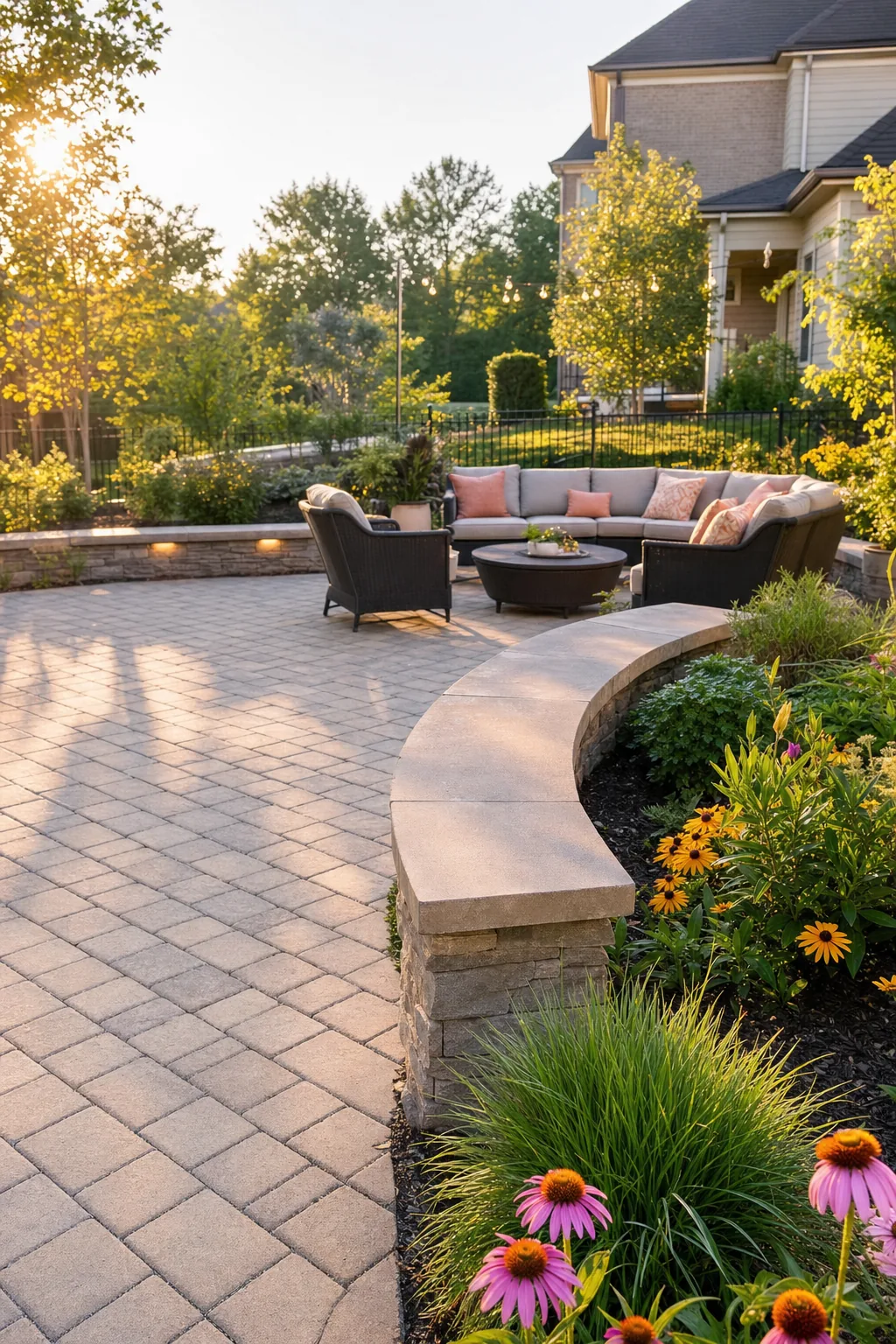
The 2026 Houzz Outdoor Trends Study found that 83% of renovated outdoor spaces now include a dedicated lounge or seating area—meaning most homeowners aren't just building a patio, they're building a true outdoor room. We keep that in mind when we design permeable systems, because the drainage solution should enhance the space, not limit it. A well-designed permeable patio can absolutely anchor a full outdoor living setup with seating walls, a fire feature, an outdoor kitchen, or a covered pergola—all while managing Upstate SC's weather like a champ.
Here's what the typical project timeline looks like once you've decided to move forward: after the design consultation and material selection, most residential permeable patio installations take between three and five days depending on size and complexity. We handle all the sub-base excavation, gravel layering, compaction, paver installation, and joint filling. When we leave your property, the surface is ready to use—and ready to handle whatever the South Carolina sky throws at it.
If you've been dealing with a backyard that puddles after every storm, a patio that stays hot long after sunset, or erosion along a sloped lot in Greenville, Spartanburg, or anywhere in between, a permeable paver patio might be the most practical and beautiful upgrade you can make this summer. It solves real problems, it looks incredible, and it adds lasting value to your home.
Ready to see what's possible? Give Joe a call at (864) 501-6994 or request your free estimate at southernpaversscpro.com. We'd love to come take a look at your yard and show you exactly what we can build for you.
Ready to Get Started?
Free estimates, no pressure. Tell us what you are thinking and we will show you what is possible.