Spring is here, the azaleas are blooming across Greenville County, and your backyard is calling. Maybe you've been dreaming about it all winter — a beautiful outdoor kitchen where you can grill on Saturday afternoons, entertain neighbors on warm evenings, and finally make that back patio the heart of your home. You've pinned the inspiration photos. You've picked out the stone. You're ready to build.
But before the first paver gets set or the first gas line gets roughed in, there's one question we hear from homeowners across Upstate South Carolina that doesn't always get a straight answer: Do I actually need a permit for an outdoor kitchen?
The honest answer? Almost certainly yes — and the details depend on exactly where you live, what you're building, and how it connects to your home's utilities. We know that's not the most exciting part of planning your dream outdoor space, but getting this right from the start protects your investment, your home's resale value, and frankly, your safety. At Southern Pavers, we handle the permitting process alongside our builds every day, so we want to walk you through exactly what Greenville and Spartanburg County homeowners need to know.
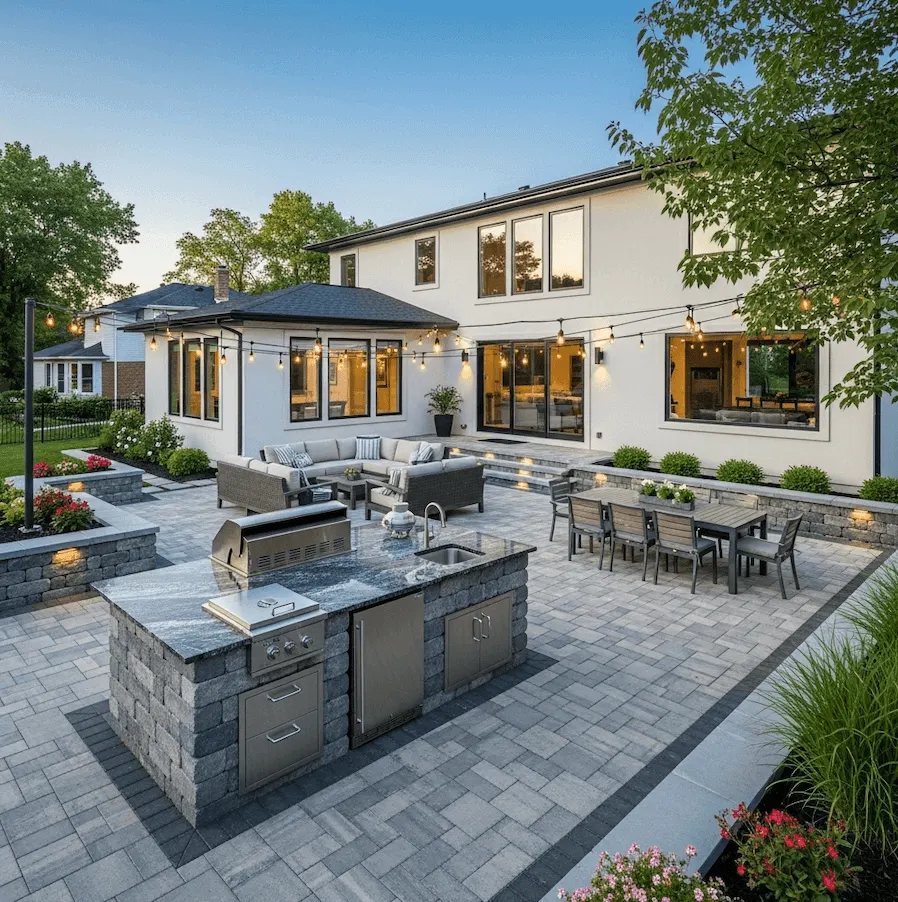
Why Outdoor Kitchen Permits Exist — and Why They Actually Protect You
We get it. Permits can feel like bureaucratic red tape standing between you and your backyard vision. But here's the thing — the building codes that govern outdoor kitchen construction in Greenville and Spartanburg counties exist for very good reasons, and most of them come down to one word: safety.
An outdoor kitchen typically involves a combination of gas lines, electrical connections (for outlets, lighting, and sometimes refrigeration), structural masonry or framing, and potentially a roof or pergola structure overhead. Each of those elements carries real risk if installed incorrectly. The permitting process ensures a licensed inspector verifies that your gas connections meet South Carolina's fuel gas code, your electrical work meets NEC standards, and your structure is built to handle wind loads and the weight of stone or masonry countertops.
Beyond safety, there's a financial reality that Upstate SC homeowners sometimes learn the hard way: an unpermitted outdoor kitchen can create serious problems when you sell your home. Buyers' home inspectors are increasingly savvy about spotting unpermitted structures. If an issue surfaces during a real estate transaction — and in Greenville's active housing market, it often does — you could be looking at forced removal, costly retrofitting, or a renegotiated sale price. We've heard from homeowners in Simpsonville and Greer who inherited exactly that headache from a previous owner's DIY build.
The bottom line: a permitted outdoor kitchen is a protected investment. It adds documented, insurable value to your property. It's the right way to build, and it's the only way we build at Southern Pavers.
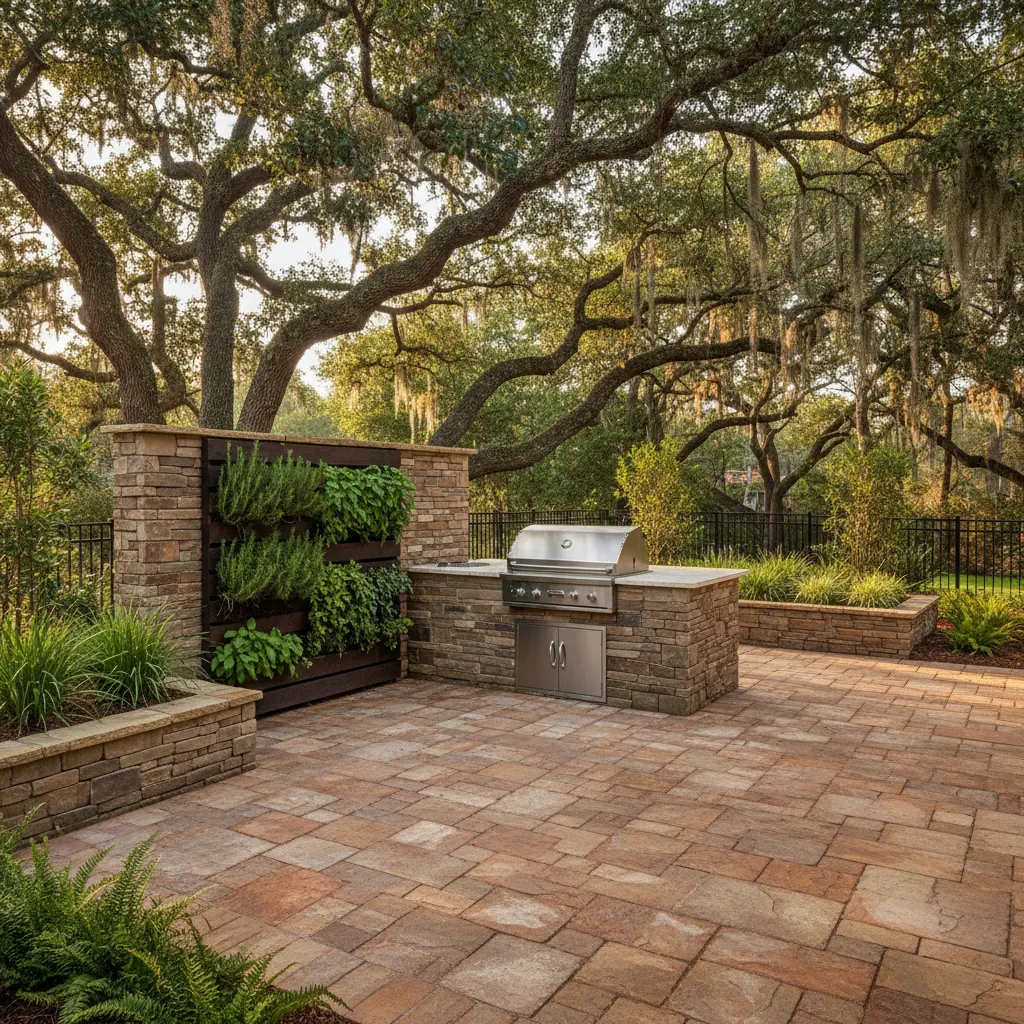
What Greenville and Spartanburg County Codes Actually Require
Here's where things get specific — and where working with a local contractor who knows Upstate SC's permitting landscape pays real dividends. Building codes and zoning requirements vary not just between Greenville and Spartanburg counties, but sometimes between municipalities within those counties. What applies in the City of Greenville may differ from unincorporated Greenville County, and Anderson County has its own set of requirements as well.
That said, here are the most common permit triggers and code requirements we navigate for outdoor kitchen projects across the region:
- Gas line connections: Any project connecting to a natural gas or propane supply line requires a mechanical permit in addition to a building permit in most Upstate SC jurisdictions. This work must be performed or inspected by a licensed plumber or gas contractor. This applies whether you're running a new line from your home or connecting to an existing stub-out.
- Electrical work: Adding outlets, under-counter lighting, a refrigerator circuit, or any hardwired electrical component triggers an electrical permit requirement. GFCI protection for outdoor receptacles is mandatory under current NEC code, and inspectors will verify this.
- Structural elements: If your outdoor kitchen includes a pergola, roof structure, or overhead covering — even a sail shade attached to a masonry column — that typically requires a building permit covering structural loads and attachment methods.
- Setback requirements: Greenville County zoning ordinances specify minimum distances from property lines, easements, and your primary structure for accessory structures. Outdoor kitchens with roofed enclosures are often classified as accessory structures. In many residential zones, you'll need to maintain a 5-to-10-foot setback from rear and side property lines, though this varies by zoning district. We always pull the parcel-specific zoning data before we design.
- Ventilation standards: Built-in grills require adequate clearance from combustible materials and, in covered installations, proper ventilation to prevent carbon monoxide accumulation. This is both a code requirement and a genuine safety issue we take seriously on every project.
One thing worth knowing: a freestanding, unconnected grill station — essentially a masonry surround with no gas, electrical, or roof connections — often falls below the permit threshold in many Upstate SC jurisdictions. But the moment you add utility connections or an overhead structure, you're almost certainly in permit territory. When in doubt, we always check with the county first rather than assume.
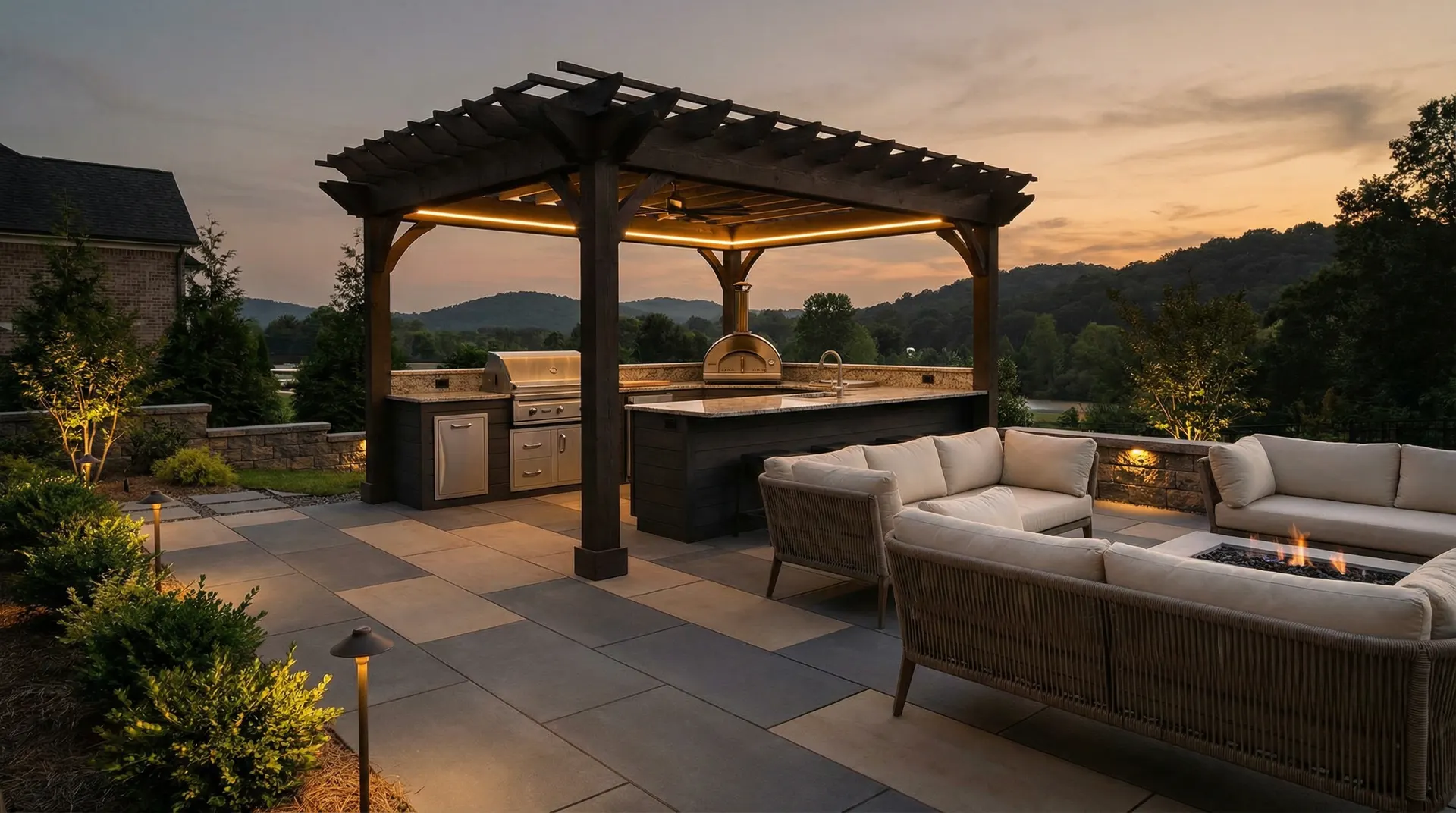
What the Permitting Process Actually Looks Like (It's Less Painful Than You Think)
One reason homeowners sometimes try to skip permits is the assumption that the process is going to be slow, complicated, and expensive. We understand that concern, but the reality for most residential outdoor kitchen projects in Greenville and Spartanburg counties is much more manageable than people expect — especially when you're working with a contractor who handles this regularly.
Here's a general picture of how the process flows for a typical outdoor kitchen build we undertake:
- Design and documentation: Before we submit anything, we produce detailed drawings that include the layout, dimensions, material specifications, utility connection points, and structural elements. For projects with roofed structures, we may include engineering documentation. Our AI-powered design visualization tool — something unique to Southern Pavers in the Upstate SC market — actually makes this step faster and more precise, because you and we both have a clear, detailed picture of the finished project before a single permit application is filed.
- Application submission: We submit permit applications to the appropriate jurisdiction — whether that's Greenville County Building Codes, the City of Spartanburg, or another municipality. Most Upstate SC counties now accept digital submissions, which has streamlined turnaround times significantly.
- Review and approval: Residential permit review for outdoor kitchen projects typically takes one to three weeks in Greenville and Spartanburg counties, depending on current workload. We factor this into your project timeline from the start so there are no surprises.
- Inspections during and after construction: Depending on the scope, your project may require rough-in inspections (before gas and electrical connections are covered) and a final inspection upon completion. We coordinate all of this and make sure everything is staged correctly for each inspection visit.
- Certificate of completion: Once all inspections pass, you receive documentation that your outdoor kitchen was built to code. This is the paper trail that protects you at resale and satisfies your homeowner's insurance carrier.
The permit fees themselves are typically modest relative to the overall project cost — often a few hundred dollars for a residential outdoor kitchen, though this varies by jurisdiction and project scope. We include permit coordination in our project management process, so you're not navigating county websites and code offices on your own.
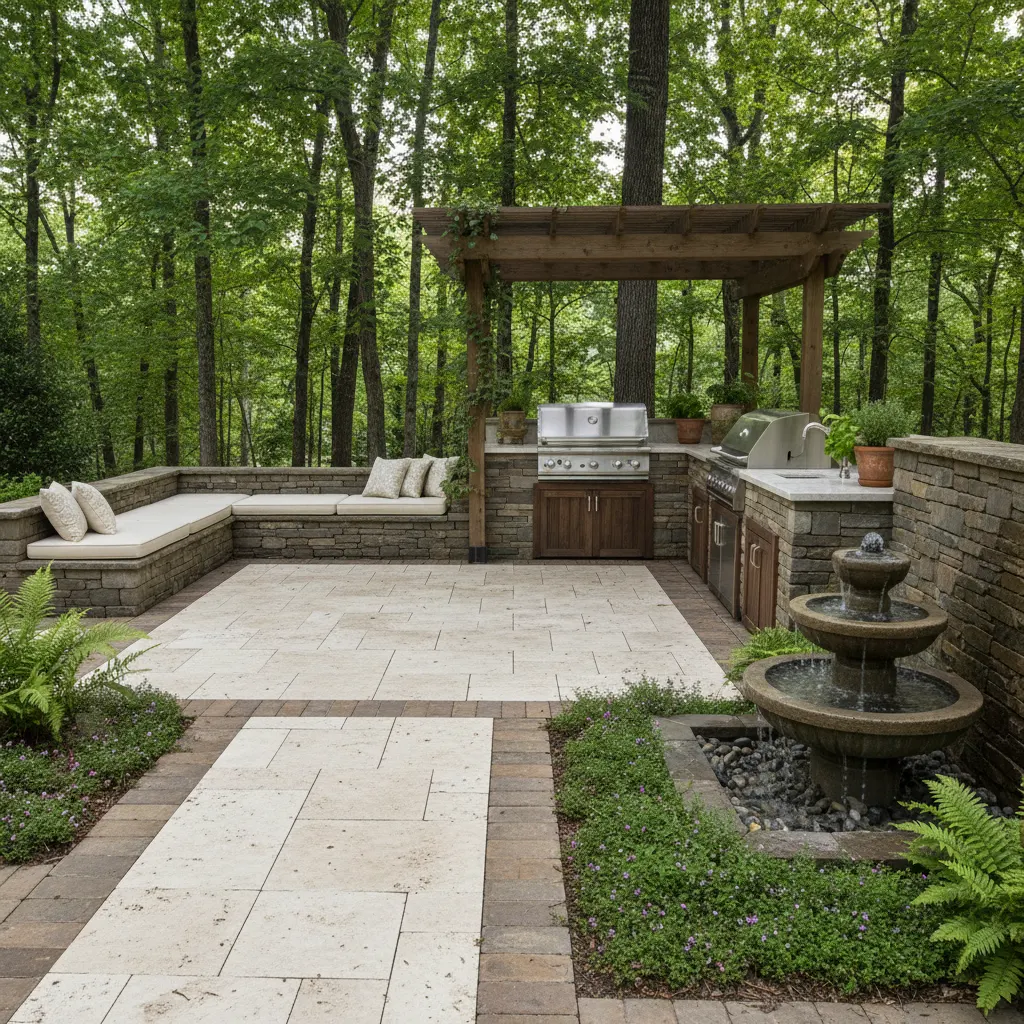
Building It Right the First Time: Materials, Design, and What to Expect from Southern Pavers
Once the permitting framework is in place, the fun part begins — and this is where we love working with Upstate SC homeowners to create something truly exceptional. A well-designed, properly permitted outdoor kitchen isn't just a grill on a patio. It's a fully realized outdoor living space that reflects how your family actually uses your backyard.
For the hardscape foundation and surrounding patio, we work with premium materials that perform beautifully in South Carolina's climate. Belgard's Mega Arbel and Tandem Plus series are perennial favorites for outdoor kitchen surrounds because they offer the textured, natural look homeowners love with the structural integrity that heavy masonry countertops and appliances demand. Tremron's Cambridge and Hackney collections are another go-to for clients who want a more refined, formal aesthetic — particularly popular in the established neighborhoods around Greenville's North Main and Augusta Road corridors.
For clients drawn to a more resort-style look, we often incorporate travertine or large-format porcelain pavers in the outdoor kitchen zone itself, transitioning to a coordinating concrete paver for the broader patio. The combination is stunning, and both materials handle Upstate SC's summer heat well — an important consideration when you're standing barefoot at the grill in July.
From a design standpoint, the most functional outdoor kitchens we build share a few common elements: a logical work triangle between the grill, prep surface, and storage; adequate counter space on both sides of the cooking zone; integrated seating that keeps guests close without crowding the cook; and lighting that makes the space usable well into the evening. Our AI-powered design visualization process lets you see exactly how all of these elements come together in your specific backyard before any ground is broken — a capability that genuinely sets the design conversation apart from the traditional back-of-napkin approach.
Whether you're in Greenville, Spartanburg, Anderson, Greer, or Simpsonville, the process starts the same way: a conversation about how you want to live in your backyard, followed by a detailed design that accounts for your site, your style, and yes — your local permitting requirements.
Spring is the perfect time to get that conversation started. Outdoor kitchen projects booked now can realistically be completed and ready for summer entertaining by late May or June, which means you're hosting Fourth of July in the backyard you've always wanted.
Ready to build it right? Give Joe a call at (864) 501-6994 or visit southernpaversscpro.com to request your free estimate. We'll walk you through the design, the permitting process, and everything in between — so your outdoor kitchen is built beautifully, built safely, and built to last.
Ready to Get Started?
Free estimates, no pressure. Tell us what you are thinking and we will show you what is possible.