Walk through any established neighborhood in Greenville, Simpsonville, or Greer right now and you'll notice something: backyards are being transformed. Not just cleaned up — completely reimagined. Homeowners across Upstate South Carolina are investing in outdoor spaces the way previous generations invested in living rooms and kitchens. And the designs they're asking for in 2026 are more ambitious than ever.
At Southern Pavers, we're seeing these shifts firsthand in every consultation. Here's a breakdown of the outdoor living trends driving the most installs this spring — and why they're a smart investment for your property in Upstate SC.
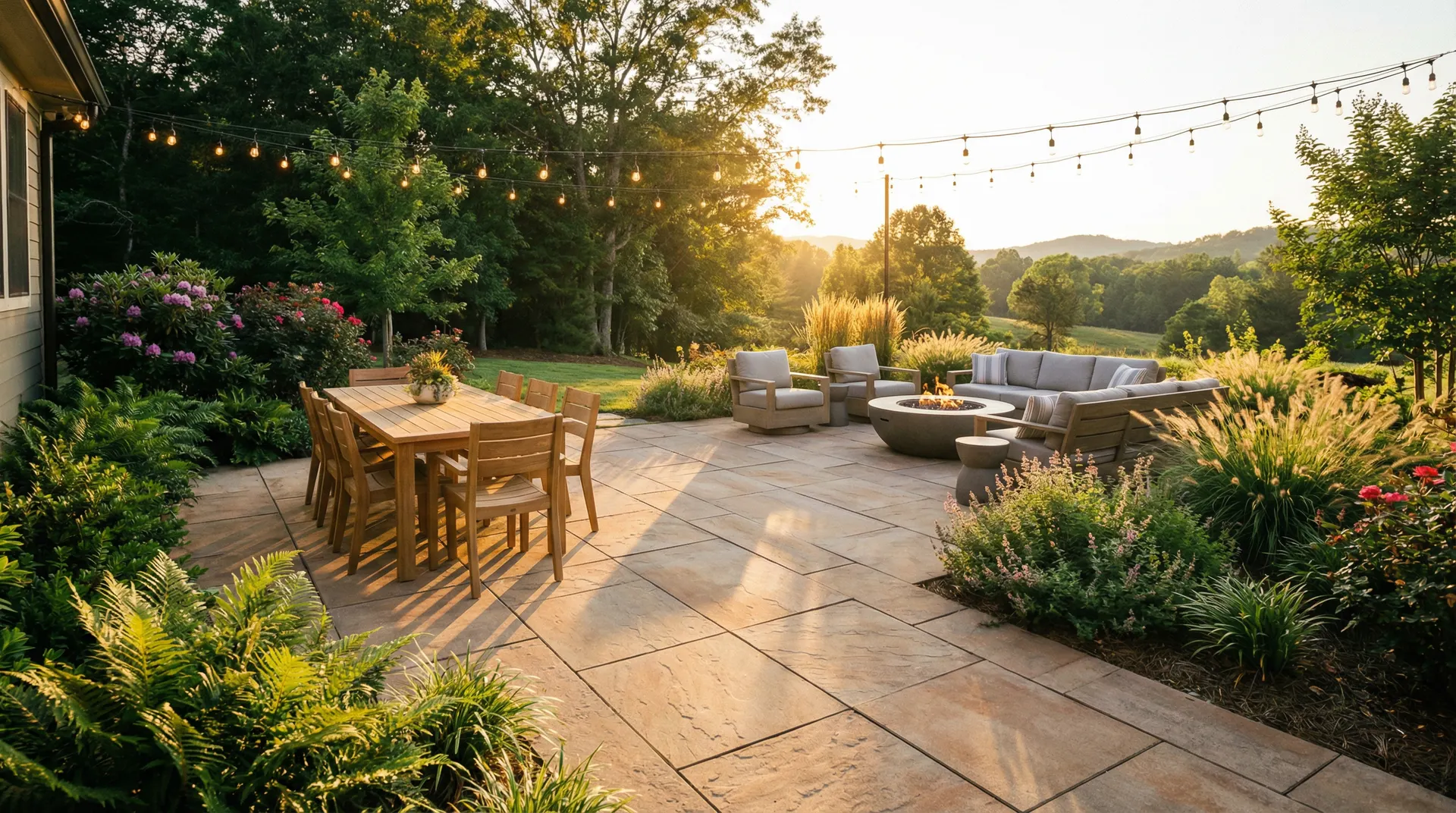
The single-slab patio is fading fast. In 2026, homeowners in Greenville and Spartanburg are designing their backyards the same way they design the interior of their homes — with defined zones for different activities. A dining area near the back door, a lounge zone anchored by a fire pit, a separate prep or grilling station. Each area has a purpose, and the paver layout connects them all with intentional flow.
This isn't just a design preference — it's a function upgrade. When your outdoor space is divided into purposeful zones, every square foot gets used. You're not just adding a patio; you're adding a true extension of your living area. For families who host, this means hosting comfortably. For homeowners who want a personal retreat, it means having a dedicated space to decompress after work.
Backyard entertainment as a category saw a 46% increase in search interest over the past twelve months — and we're seeing that demand directly in our consultation requests this spring.
- Separate dining and lounge zones with consistent paver material
- Fire pit areas as a natural anchor for the outdoor living space
- Defined pathways connecting zones for a polished, residential resort feel
- Unified hardscape materials across every zone for a cohesive look
Sustainability has officially crossed over from a niche preference to a mainstream demand. In Upstate SC — where heavy summer rains can cause real pooling and erosion problems on sloped lots — permeable pavers are one of the smartest functional upgrades a homeowner can make. Instead of water pooling on the surface or running off into the yard, it drains naturally into the sub-base and back into the soil.
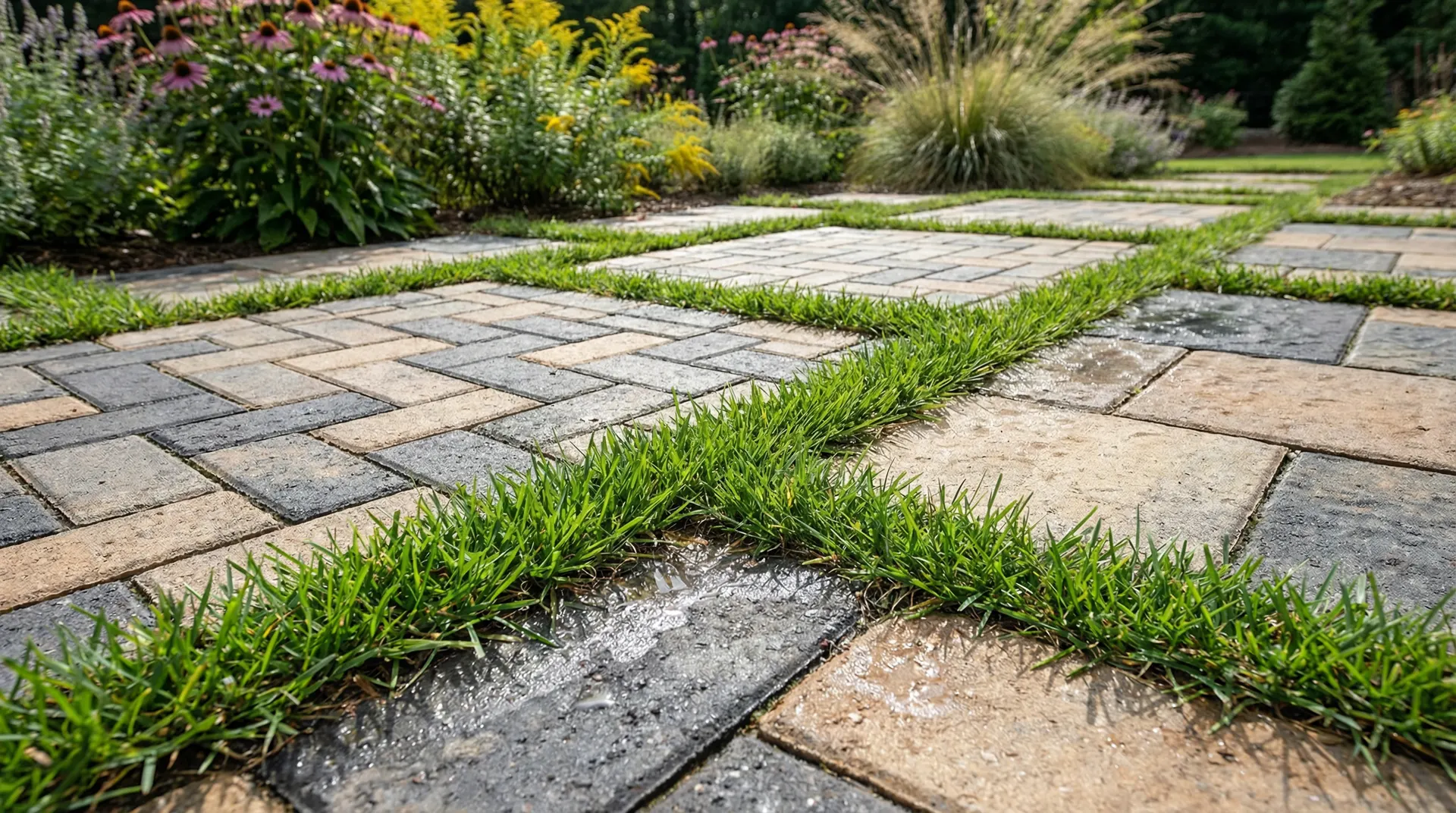
This isn't just an environmental choice — it's a property protection choice. Drainage issues on sloped lots in Greenville and Anderson are one of the most common reasons homeowners call us. Permeable systems solve the aesthetic problem (a beautiful hardscape) and the drainage problem simultaneously. Sustainable luxury as a design category is up 187% in popularity over the past twelve months according to Google Trends data — and permeable paver systems sit right at that intersection.
Upstate SC's clay-heavy soils and variable rainfall make proper drainage planning critical. When we design a paver system here, we're always thinking about how water moves through the yard — not just on day one, but five and ten years down the line.
- Permeable joint systems that allow rainwater to infiltrate naturally
- Reclaimed stone and locally sourced natural stone for low-impact installs
- Grass-and-paver mixed layouts combining organic texture with hardscape structure
- Earth-toned palettes — warm taupes, charcoals, sandstone — that age gracefully
If there's one upgrade that consistently delivers the biggest lifestyle return on investment, it's an outdoor kitchen built on a well-designed paver surface. Homeowners in Taylors, Duncan, and Fountain Inn are asking for full culinary setups — built-in grills, stone countertops, prep stations, and refrigerators — all anchored on large-format paver surfaces with integrated lighting and pergola shade overhead.
The benchmark has shifted in 2026. Homeowners aren't just asking for a grill and some chairs. They want what we call restaurant-quality functionality — a space where they can cook a full meal, host twenty people, and not have to run back inside every five minutes for something. The result is a backyard that gets used multiple nights a week instead of just on holidays.
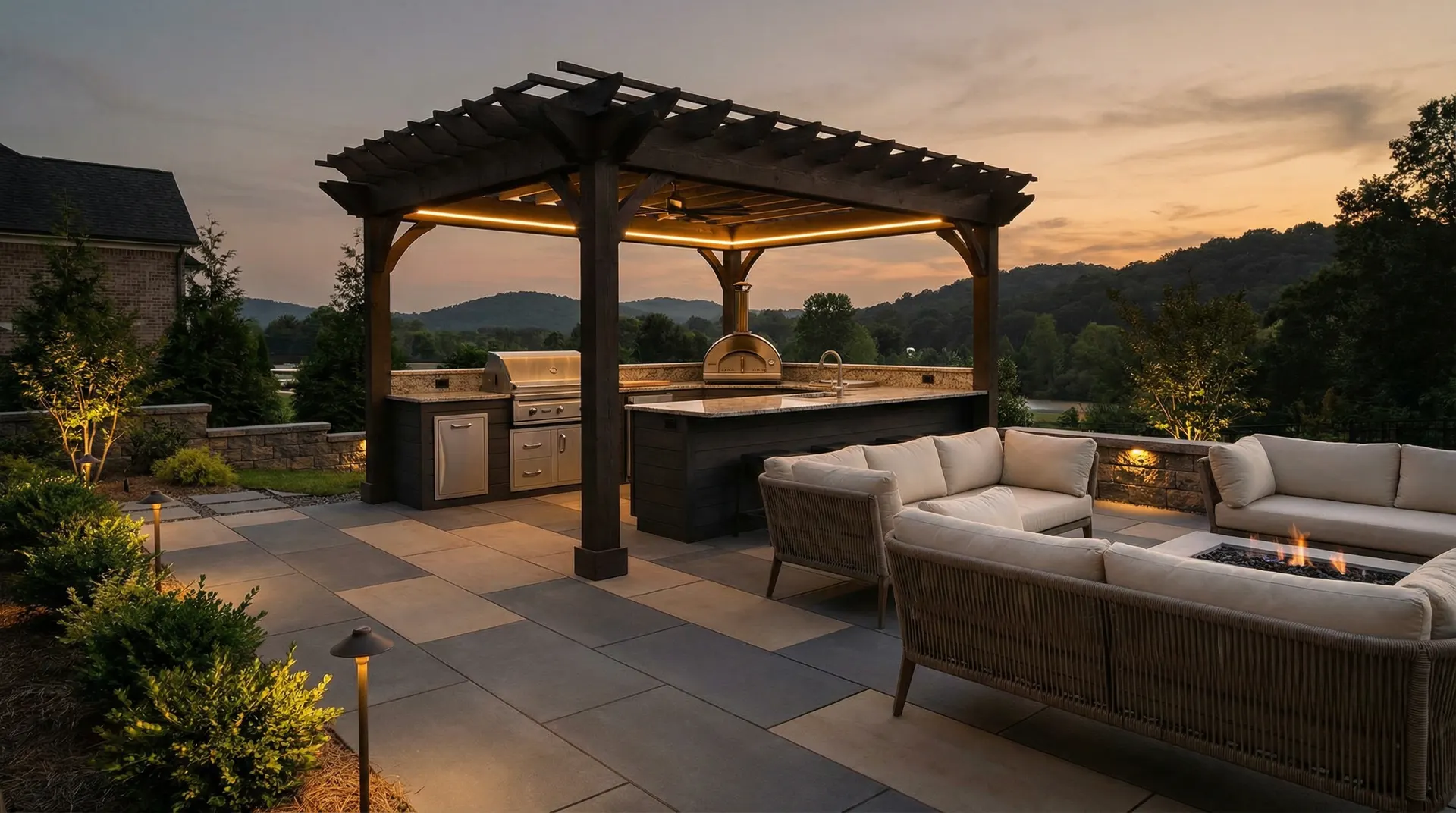
Large-format pavers are the foundation choice for this trend. Fewer joints, cleaner lines, and a surface that reads upscale without being fussy. Paired with charcoal or warm sandstone tones, they create a backdrop that makes any outdoor furniture and kitchen setup look intentional and high-end.
- Large-format paver surfaces in grid and linear layouts for a clean, modern foundation
- Integrated low-voltage landscape lighting along paver edges and steps
- Pergola structures as anchors for outdoor kitchen zones
- Built-in seating along retaining walls or raised planters surrounding the kitchen area
Upstate South Carolina has a lot of character in its topography — and more homeowners are leaning into that rather than fighting it. Multi-level paver patios that work with the natural slope of a yard are one of the most visually dramatic and functionally smart investments a homeowner can make. Instead of grading a sloped lot flat, we design tiered spaces: a lower fire pit lounge, a mid-level dining terrace, an upper entertainment or kitchen zone connected by wide paver steps.
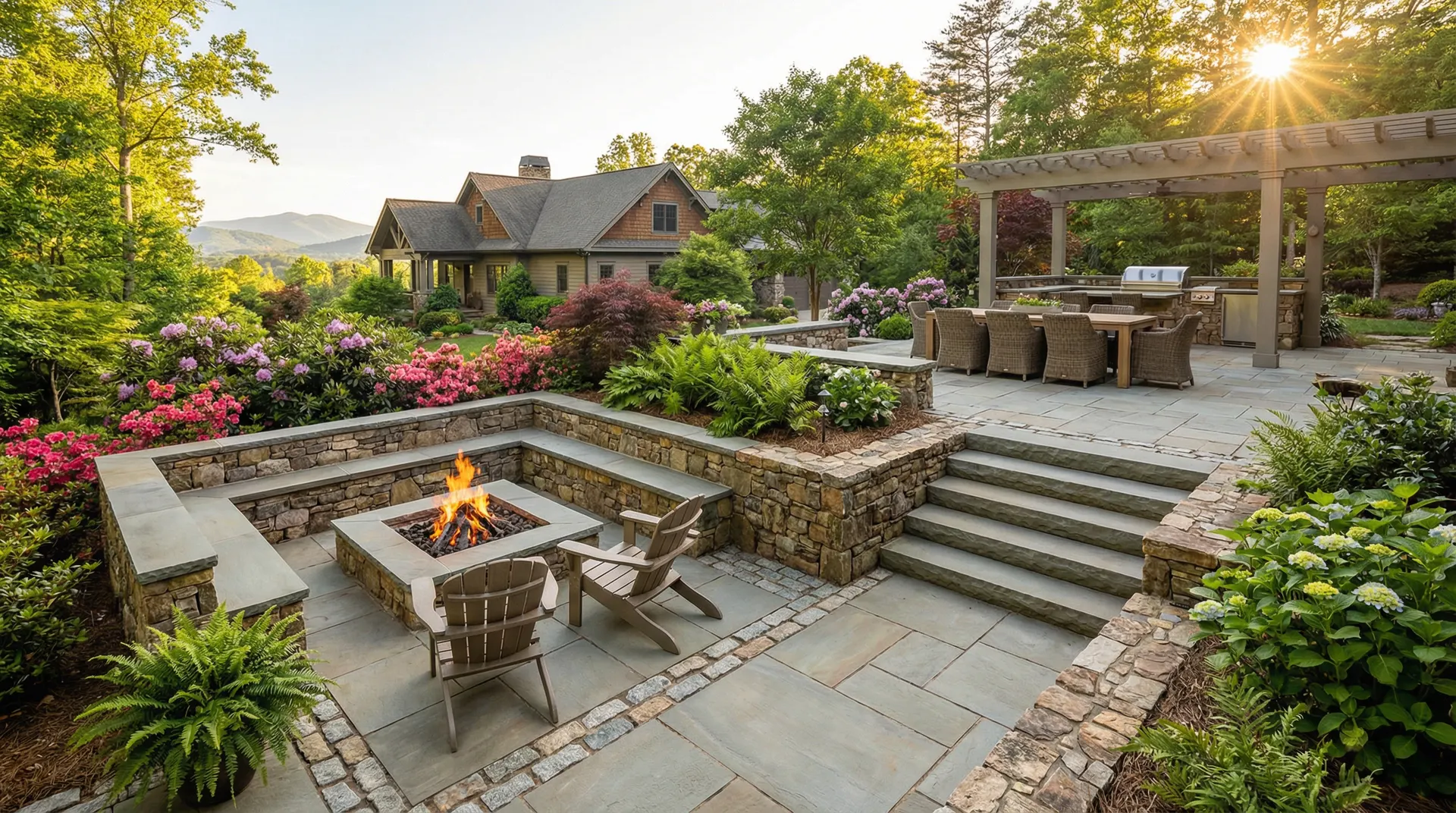
Retaining walls in 2026 are no longer purely functional. They're designed as features — mixed-material installations using natural fieldstone, smooth cut stone caps, and cobblestone accents that frame the yard and give it depth and dimension. When the walls, steps, and patio surfaces all work together, you get a backyard that feels like a professionally designed landscape rather than just a hardscape installation.
For sloped lots in areas like Travelers Rest, Inman, and Boiling Springs, this approach also solves real erosion and water management problems while dramatically increasing how much of the yard is actually usable. A steep backyard that was previously just a mowing hassle becomes a full outdoor living environment.
- Tiered patio layouts that work with natural grade changes
- Natural stone retaining walls with clean cap detail as design features
- Wide paver steps connecting levels for safe, elegant transitions
- Mixed materials — smooth pavers with cobblestone or fieldstone accents — for visual richness
- Lower-level fire pit areas as a natural gathering anchor
What These Trends Mean for Upstate SC Specifically
These trends aren't just national patterns from design magazines — they're showing up in backyards in Greenville, Simpsonville, Anderson, Greer, Spartanburg, and every community in between. Upstate SC's climate gives homeowners a genuinely long outdoor season, which makes investment in outdoor living more practical here than almost anywhere in the country. You can realistically use a well-designed patio eight to nine months of the year.
The property value case is strong, too. A professionally installed paver patio, outdoor kitchen zone, or multi-level design consistently adds more in value than it costs — especially in a market where buyers increasingly expect outdoor living to be part of the home's total offering.
The one thing that can derail any of these projects is timing. Spring is Upstate SC's busiest season for outdoor installs, and contractor schedules fill fast once March hits. Homeowners who are planning any of the above for 2026 should be having those conversations now — not in April when the wait is months long.
Let's Talk About Your Backyard
Whether you're thinking about a single-zone patio or a full multi-level outdoor living transformation, the first step is a quick conversation. Joe will come out, look at your space, listen to what you want, and put together a plan and quote that fits your yard and your budget. No pressure — just a real look at what's possible.
Start Your 2026 Outdoor Project
Free estimates, no pressure. Whether you want a multi-zone patio, an outdoor kitchen, or a multi-level backyard transformation — tell us what you're thinking and we'll show you what's possible.